Something structural has shifted in how people find businesses, and most local owners haven't been told about it in plain terms.
What is zero-click search, and how common is it now?
A zero-click search is one where someone gets their answer without ever visiting a website, and it is now the majority of searches.
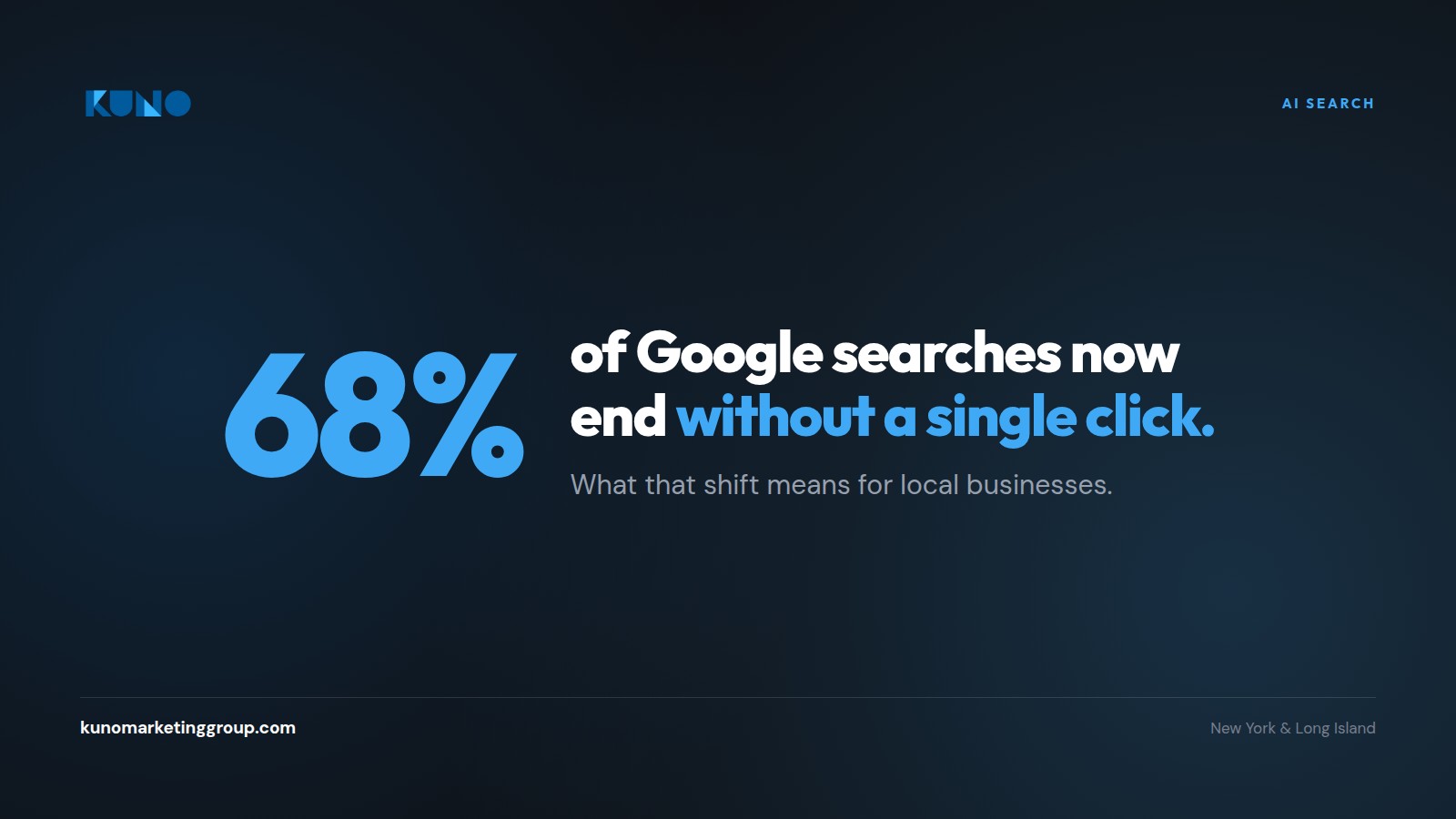
Google searches in the U.S. ended without a click 68.01% of the time in the first four months of 2026, up from 60.45% in 2024, according to SparkToro's analysis of Similarweb clickstream data. And when an AI Overview appears on the results page, which happens on more than 20% of searches, click-through rates drop by roughly 60%.
Read that again as a business owner rather than a marketer. Two out of three searches now end on the results page. The user got their answer and never visited anyone's website.
What does zero-click search mean for a local business?
It means the goal stops being the click and starts being the mention.
The instinct is to panic about losing traffic. That's the wrong frame for a local business, because you were never in the traffic business. You're in the booked-appointment business. Traffic was only ever a proxy.
What matters now is whether you are the business named in the answer, whether Google's AI Overview, ChatGPT, or Perplexity mentions you when someone asks for a good vet in Malverne. Being cited in the answer can be better than a click, because the person arrives already recommended.
How does AI decide which businesses to recommend?
These systems pull from sources they can read, parse, and corroborate, which means most of what makes you visible is under your control.
Structured, machine-readable information. If your hours, services, location, and business type exist only as images or vague prose, a language model has nothing solid to grab. Schema markup exists precisely so a machine can read your business without guessing.
Consistency across the web. If your address is formatted three different ways across your site, your Google profile, and old directory listings, that's a confidence problem. Models corroborate across sources, and contradictions get you dropped.
Content that answers actual questions. Pages built around what people actually ask are the pages that get pulled into answers. What a procedure costs. Whether you take walk-ins. What to do in an emergency. Pages describing how committed you are to excellence are not.
Being crawlable at all. Some sites block AI crawlers by default without anyone deciding to. Worth checking.
Is AI search bad for small local businesses?
It's considerably less brutal for local businesses than for publishers.
A national blog losing two-thirds of its clicks is losing its business model. A local vet who gets named in an AI answer is getting the same thing they always wanted, a nearby person who now knows they exist.
And local is genuinely hard for these systems to fake. They lean on real signals: reviews, profiles, consistent details, actual presence. That favors businesses that exist and are maintained over whoever publishes the most content.
How do you get recommended by AI search?
You make yourself easy for a machine to describe with confidence:
- Make your core facts machine-readable with schema markup on hours, location, and services
- Make your name, address, and phone identical everywhere they appear
- Write pages that answer real questions in plain language
- Keep your Google Business Profile genuinely current
- Confirm you aren't blocking the crawlers you'd want citing you
None of this is a growth hack. It's the same principle that always applied: be easy to find, easy to verify, and easy to choose. The audience just changed from a person skimming ten blue links to a model assembling an answer.
The businesses that stay visible will be the ones whose information is clear enough for a machine to repeat with confidence.
Related: the Google Business Profile mistakes costing you customers covers the single biggest local signal these systems read. If you want this handled properly, here's how I work with local businesses, or get in touch.
A zero-click search is one where the user gets their answer on the results page and never visits a website. In the U.S., 68.01% of Google searches ended without a click during the first four months of 2026, according to SparkToro's analysis of Similarweb clickstream data, up from 60.45% in 2024.
AI Overviews appear on more than 20% of Google searches, and when they do, click-through rates drop by roughly 60%. For local businesses the practical effect is less about lost traffic and more about whether the business gets named inside the answer itself.
Make your core facts machine-readable with structured data, keep your name, address, and phone identical everywhere they appear online, publish content that answers real customer questions in plain language, maintain an accurate Google Business Profile, and confirm you are not blocking AI crawlers.
It is less damaging for local businesses than for publishers. A local business that gets named in an AI-generated answer still gets what it always wanted, a nearby customer who now knows it exists. Local results also rely on signals that are hard to fake, such as reviews and consistent business details.